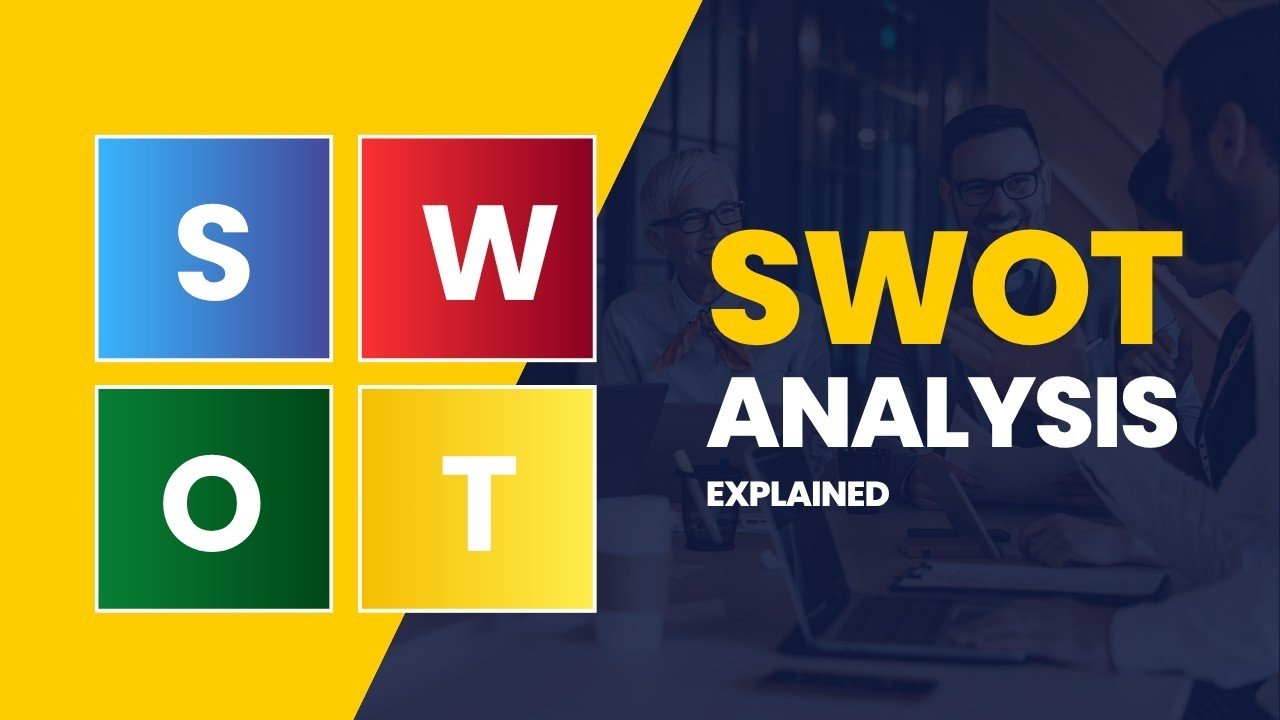
Most leaders misuse SWOT, they treat it like a filing cabinet instead of a decision-making tool. I often ask executives, after your SWOT, what did you stop doing? A SWOT is not a strategy but it is an inventory.
- Strengths tell you where to double down by multiplying effort.
- Weaknesses tell you where to fix or exit.
- Opportunities tell you where to place your bets.
- Threats tell you where to build defenses.

The mistake is that many teams stop at listing and they spend hours debating boxes and minutes making choices. The real value comes when you convert SWOT into TOWS. This is what I mean:
- If a strength meets an opportunity, ask: “How do we win faster?”
- If a weakness meets an opportunity, ask: “What must we fix before we can compete?”
- If a strength meets a threat, ask: “How do we use our advantage to protect ourselves?”
- If a weakness meets a threat, ask: “What could kill us if ignored?”
Here is my challenge to every board and executive team: after completing a SWOT, write down three things you will start, three things you will stop, and three things you will double down on.
That is strategy, SWOT is only strategic when the boxes become choices. Or put differently: Analysis creates awareness. Choices create results. That is where strategy begins. Not in the SWOT. In the decisions that follow.
The SWOT in action
TOWS is simply SWOT turned into action. Most consultants know SWOT:
- Strengths
- Weaknesses
- Opportunities
- Threats
The problem is that SWOT only tells you what exists. TOWS tells you what to do. Think of SWOT as a diagnosis and TOWS as the prescription. For example, imagine a bank.
Strength: Strong branch network.
Weakness: Slow loan approval process.
Opportunity: Growing SME market.
Threat: Fintechs offering instant loans.
A SWOT workshop would stop there. Outstanding consultants continue to the TOWS workshop and ask four questions:
SO (Strengths + Opportunities)
How can we use our strengths to seize opportunities?
Example: Use the branch network to aggressively acquire SMEs before competitors do.
ST (Strengths + Threats)
How can we use our strengths to reduce threats?
Example:
Use trusted branch relationships and local presence to defend against fintech competitors.
WO (Weaknesses + Opportunities)
How can we fix weaknesses to capture opportunities?
Example: Automate loan approvals so SMEs receive funding within 24 hours.
WT (Weaknesses + Threats)
How can we reduce weaknesses and avoid threats?
Example: Redesign credit processes immediately before fintechs capture the entire SME segment.
The TOWS Matrix looks like this:
I tell my clients to “never present a SWOT to the board, instead present TOWS.” A board does not need four lists. A board needs choices.
For example:
SWOT says: “We have skilled staff.”
TOWS says: “We will use our skilled staff to launch three new products within six months that is a strategy. SWOT identifies the battlefield while TOWS chooses how to fight.”
That is why many strategic plans fail. Teams spend weeks creating SWOT tables and never convert them into strategic choices, resource allocations, accountabilities, and execution plans.
The boxes look impressive. The results never come.
I remain, Mr Strategy.