
It is like watching a farmer plant maize in the desert because the clouds look promising. The excitement is real, the dream is bold. But six months later, the fields are barren, the money wasted.
I see the same pattern in a companies I am advising. They rush to launch a new product, convinced the market is starving for it. The idea is brilliant, the energy is high but the losses pile up fast.
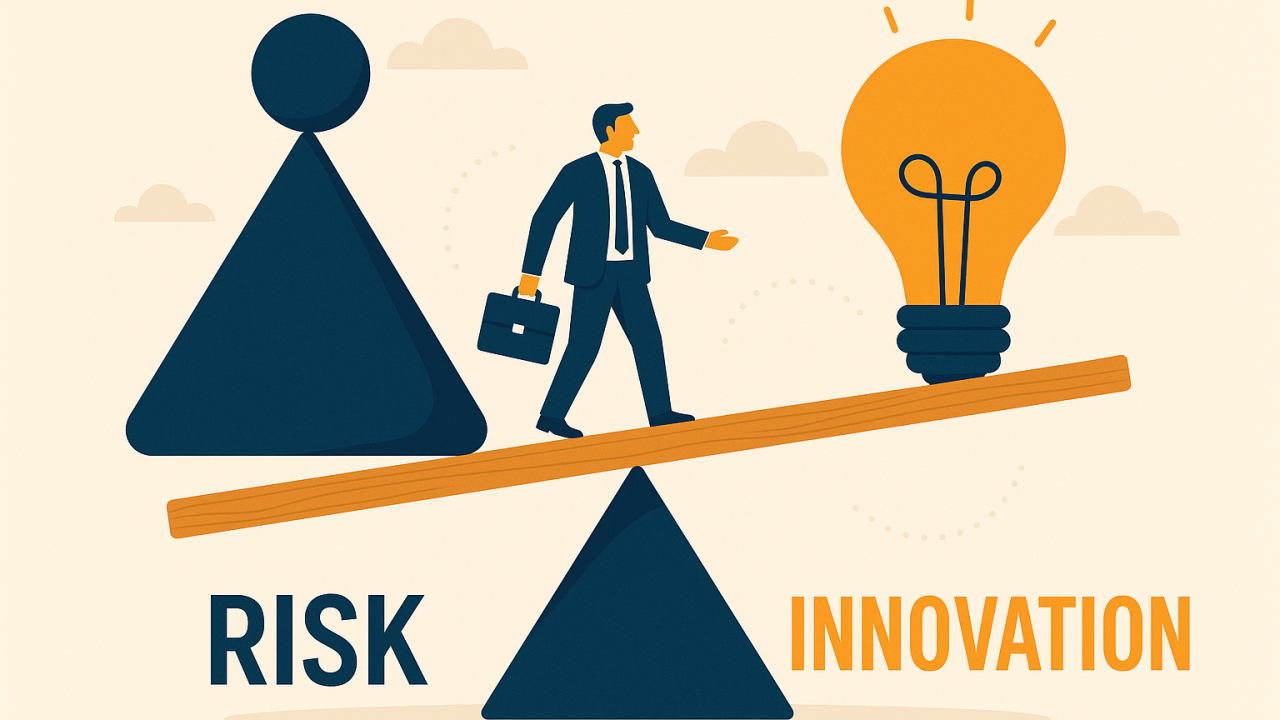
Not because innovation is wrong, but because it is done without a risk compass. Innovation without risk is not strategy. It is gambling.
The paradox is simple, too much caution, and you stagnate. Too much risk, and you implode. For great companies play in the tension between speed and safety.
When I deep dive into a business, I look at two questions. First, where can you afford to experiment cheaply? Second, where must you enforce non-negotiable safeguards?
In the bank’s case, the cheap experiments could have been piloting with 5,000 customers and stress-testing repayment patterns. Instead, they went national overnight.
Balancing innovation and risk requires discipline.
- Define your innovation sandbox. A consumer goods firm I worked with limited experiments to one region. If it worked, they scaled. If it failed, losses were manageable.
- Build risk speed bumps. In technology, this means beta testing, phased rollouts, kill-switches. In retail, it means limiting credit exposure. In healthcare, it means protocols before scaling.
- Demand feedback loops. Innovators must meet risk officers weekly, not quarterly. Innovation without risk dialogue is gambling.
The leadership challenge is ego. Many leaders want to be first. But winners are those who know where to test, when to pause, and how to scale with control.
Most executives cheer innovation but whisper risk. That is why companies die not from lack of ideas but from reckless bets. The solution is not to kill innovation, but to cage it with the right safeguards.
When I diagnose firms, I see the same mistake: innovation teams chasing glory while risk officers sit in a corner, called in only after disaster.
That is gambling. Winners build risk into the design stage, not the postmortem.

"Innovation is fire, and risk is water. A wise leader knows how to hold both without burning or drowning."
Tweet
Here is a tool I use with boards and executives.
Step 1: Catalogue innovations
Sit with your leadership team. On the left column, write down every active innovation,new products, pilots, technologies, markets. Nothing is too small to list.
Step 2: Expose the risks
On the right, identify the risks each innovation carries. Is it financial loss? Reputational damage? Regulatory backlash? Customer trust erosion? Write them plainly, no jargon.
Step 3: Define safeguards before scaling
For every innovation - risk pair, agree on at least one non-negotiable safeguard. This could be phased rollouts, customer pilots, escrow accounts, kill-switches, regulatory approvals, or independent audits.
If you cannot define a safeguard, the innovation is not ready to scale.
Step 4: Institutionalize review
Review this table monthly at executive level. Celebrate what worked. Kill what failed. Update safeguards continuously. This discipline prevents pet projects from becoming silent killers.
Mr Strategy’s innovation pivot tool
Innovation / Pilot | Risk Identified | Safeguard Required Before Scaling | Status | Leadership Action |
Mobile lending app | High default rates | Pilot with 5,000 customers + AI credit scoring | Pending | Approve phased rollout |
E-commerce venture | Logistics failure | Third-party delivery contracts stress-tested | In progress | Monitor KPIs weekly |
AI recruitment tool | Bias, lawsuits | Independent ethics audit + HR training | Not started | Pause until audit done |
Regional expansion | Regulatory sanctions | Obtain licenses before first transaction | Active | Assign legal oversight |
As CEO, do not just ask “what is new?” Ask, “what is protected?” Innovation without a safety net is adrenaline, not strategy.
Outstanding firms treat this table as a living dashboard. It becomes the firewall between creativity and catastrophe.


