
In our series of ‘Measurement of the Expected Credit Loss, we have discussed what credit loss is and its components of the 12 months & lifetime expected credit. IFRS 9 requires recognition of impairment losses on a forward-looking basis which means that impairment loss is recognized before the occurrence of any credit event. These are referred to as expected credit losses (‘ECL’). IFRS 9.5.5.1 gives guidance on which financial instruments are impaired. These are;
- assets measured at amortized cost
- assets measured at FVOCI with recycling
- loan commitments (not at FVTPL)
- financial guarantee contracts (not at FVTPL)
- lease receivables (IFRS 16)
- contract assets (IFRS 15)
There are three approaches to impairment under IFRS 9 standard; i) general approach, ii) simplified approach and iii) specific approach for purchased or originated credit-impaired financial assets. For now, let’s discuss the general approach.
“For the past one and a half hours, you have been talking about the general approach, what’s does it entail?” asked one Board member at one of the summitIFRS9 Board briefing.
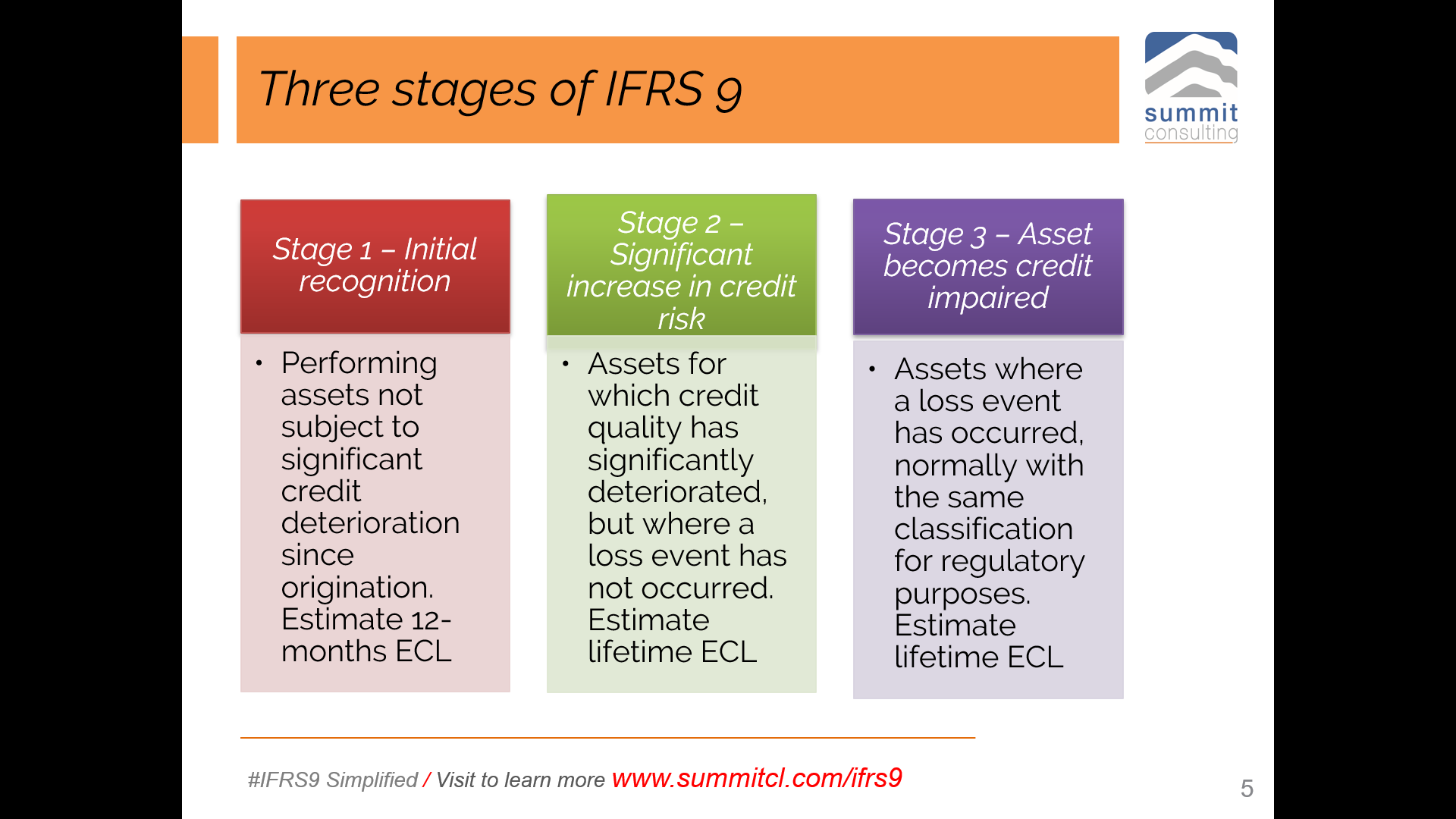
“The general approach, unlike the simplified approach, has three buckets of impairment; 12months ECL, lifetime ECL for financial assets under a significant increase in credit risk and those that are already credit impaired,” responded the summitIFRS9 presenter.
I happen to have been raised in a rural setting. While growing up, some things never came our way unless something happened. Being served a meal of chicken stew was only on the Christmas day despite the fact we kept chicken at home. The other time we would eat chicken was only my parents hosted visitors from Kampala. And the last chance to enjoy it was during the time of chicken disease outbreak in the village! I was always on the look to spot out which chicken is fevering. It was fun!
You see. Before chicken was affected by any diseases, they would move freely and feed all day. When they caught coccidiosis, their ability to move and feed reduced. I would have to throw stones at them so that they can move. At this stage, they would be slaughtered and properly cooked for hours. When the disease becomes extreme, we would find them dead in the poultry house the next morning.
And this is what takes place in the three stages under the general approach. You have the performing clients, chicken that is not affected by diseases. You have those struggling to pay. They are characterized by missed days (days in arrears), call them chicken affected by the coccidiosis. The last bucket takes into consideration of clients in default, the dead chicken. That’s the typical illustration of the general approach to impairment under IFRS 9. Click here to download the IFRS 9 impairment model based on the general approach.


0 comments
Leave a comment