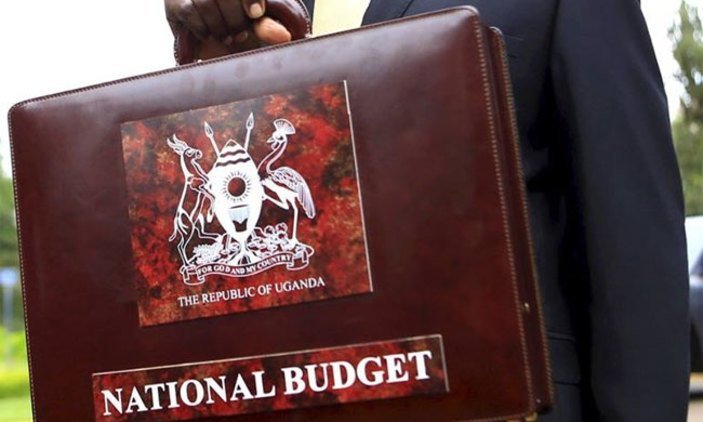
For some of you who grew up in the village, you remember elders used to tell us: “You do not climb a mango tree with a machete in your hand. You either came to harvest or to prune.” The FY2025/26 Uganda budget is that mango tree. Tall, well-shaped, full of promise. But climb it with the wrong tool, and you will descend with blisters instead of fruit.
Uganda’s economy is not lacking in ambition. It is lacking in execution. That is why this budget is not a windfall. It is a trap for the lazy, the reactive, and the loud.
If you are not strategic, you will see numbers. If you are wise, you will see gaps and build solutions to fill them.
Let us get clear.
Where is the UGX 72.1 trillion hiding?
The FY2025/26 budget is UGX 72.1 trillion. But over 71% of it is already pre-committed:
- Recurrent spending: UGX 31.9 trillion
- Debt servicing: UGX 18.9 trillion
- Development budget: UGX 21.3 trillion, mostly project loans and donor flows

FY2025/26 Budget (UGX 72.1 trillion) Breakdown, Source: Budget
Actual discretionary space? Less than UGX 20 trillion.
This year’s budget is not a buffet. It is a tightly rationed menu. And you need to know where to sit to be served.
This budget also marks the formal launch of Year One of the NDPIV (2025/26) of Uganda’s Fourth National Development Plan, built to make the country a modern, inclusive, knowledge-based economy by 2040.
But here is what most people and business leaders miss: NDPIV is not a government implementation plan. It is a private sector delivery mandate.
In response to several requests to my LinkedIn inbox, let me show you how to unlock it, sector by sector.
- To financial institutions, stop storing money, start deploying systems
You are a banker, MFI, SACCO, VSLA or fintech? Here is how to eat big. The government plans to borrow UGX 8.9 trillion domestically this year. That means T-Bill rates will rise. Lazy banks will be tempted to lend to the state, not the people. But that is short-termism. If you are a real builder, this is your cue to do the opposite.
Where the opportunity lies:
- Agro-industrialisation gets UGX 1.86 trillion in FY2025/26, but over UGX 6 trillion is needed in private value chain financing to hit NDPIV’s 50% agro-processing target
- The Parish Development Model (UGX 1.059 trillion) remains under-absorbed. But every SACCO receiving funds is now hungry for banking tools, risk analytics, and mobile cashflows.
- Over UGX 500 billion has been earmarked across ministries for climate resilience, insurance, irrigation, and sustainable energy access, all requiring bankable models to unlock.
What banks winning must do:
- Set up PIAP-aligned lending desks, one per NDPIV program. Finance output indicators.
- Partner with cooperatives to run pre-financing assessments, risk sharing, and mobile field scoring.
- Offer compliance-linked wallets, tax deductibility, URA smart filing, payroll-tax bundling, to help SMEs survive aggressive tax collection (UGX 31.5 trillion URA target).
I can hear you say, “But risk is high.”
Exactly. That is why your returns will be too, if you de-risk using SACCOs, off-takers, and PDM linkages. This is not charity. It is a structure.
The size of the annual prize is over UGX 710 billion in private lending opportunities across five PIAPs this year alone.
Chart 2: Opportunities in the program implementation action plan (PIAP).
Chart 2 shows that nearly half (46.8%) of Uganda’s FY2025/26 delivery potential sits in Human Capital Development. But this is not about chalkboards. It is about platforms, data, last-mile health logistics, teacher monitoring, and performance reporting. Whoever builds these systems owns the heartbeat of Uganda’s future. Roads and Energy (23.1%) are not just cement and poles. They are supply chains. Every rural hospital, every digital service rides on this backbone. And the opportunity is not in construction. It is in powering the last mile, solar grids, electric logistics, and maintenance-as-a-service. Consulting and Institutional Capacity (10.3%) beats Agro industrialisation (9.6%) in opportunity size. That is not a typo. It is a signal. MDAs do not need more reports. They need embedded experts who deliver results, not PowerPoint. Tourism is just 1%. But it could be the most profitable slice. Why? Because it is underfunded, which means low competition. And it is experiential, which means high margin. Smart entrepreneurs will package heritage, wellness, and eco-retreats for diaspora and MICE travellers hungry for meaning, not just scenery.
Chart 3: PIAP Opportunities vs FY2025/26 budget & funding gaps
Look at chart 3 closely, Agro-industrialisation, Human Capital, and Roads are fully funded. But that does not mean they are closed; it means execution partners are urgently needed.
Now see ICT, Green Finance, and Consulting. The gaps are massive. That is not a failure; it is a direct invitation to private players. If you are a bank, build lending capacity that unlocks infrastructure. If you are an entrepreneur, build last-mile digital services and skilling hubs. If you are a consultant, align your services to measurable PIAP indicators. Do not chase procurement. Solve delivery.
- Are you in hospitality? Do not sell beds, sell transformation zones.
Tourism gets UGX 194 billion this year. It sounds like a snub. But again, the real story is in NDPIV. Uganda targets 5 million visitors by 2030, up from 1.5 million. The government will build roads, signage, and brand Uganda. But who will build the product? You.
This is where I see the opportunity lies
- 18 tourism development zones have been gazetted, Kidepo, Ssese, Mt. Elgon, West Nile, and others, but only 4 have functional accommodation clusters.
- Domestic tourism is growing. And government spending on conferences, benchmarking, and retreats creates at least UGX 150 billion in MICE demand annually.
Chart 4: Tourism opportunity landscape, Uganda FY2025/26
See chart 4 to see this clearly:
- Only 22% of Uganda’s 18 tourism zones have functional accommodation clusters. That means 14 zones, including Kidepo, Ssese, and Mt. Elgon, are wide open for first movers. Not in theory. On the ground.
- Meanwhile, UGX 150 billion in annual MICE tourism demand (conferences, benchmarking, retreats) is flowing, with no structured private sector offerings to absorb it.
This is not a funding problem. It is a product design problem. If you are in hospitality or real estate and you miss this wave, it will not be because the market was not ready. It will be because you waited for tourists, instead of building for travellers. Infrastructure is coming. The brand is coming. Are you?
To tap into this, I recommend you consider,
- Build retreat hubs near agro-processing or innovation zones. Brand them as rural investor centres.
- Train local youth in eco-guiding, hospitality, and storytelling. Offer last-mile tours through digital tools.
- Package diaspora experiences, culture, food, music, not just safari.
The naysayers will say, “But tourists are not coming yet.”
Now is the best time to start. Build now. Own the ground. By the time they arrive, you will not just run a hotel, you will run a zone.
The size of the annual prize is huge- about UGX 300 billion in off-grid hospitality demand, unstructured, unserved, and growing.
- Consultants and professionals- forget RFPs. Write frameworks and implement delivery.
This budget is not friendly to proposal writers. It is friendly to problem-solvers with systems.
The NDPIV results matrix (PIAP RRF) lists over 1,216 national output indicators for FY2025/26. But fewer than 500 have named implementers. The rest is white space, ripe for smart professionals. I see many opportunities in the following areas:
- Health gets UGX 4.4 trillion, but less than 30% of facilities are digitally tracked. Community referral tools, telemedicine, and staff performance audits are all open fields.
- Education gets UGX 5.9 trillion, but school inspection, e-learning systems, and digital curriculum design are still paper-based.
- Governance programmes demand over 60 services digitised (land, tax, licensing, records), with no local platforms yet functioning.
Here is what I recommend you act on:
- Align your practice to one NDPIV program. Be the go-to name for one domain: energy audits, rural health systems, education dashboards, or legal frameworks.
- Partner with donors to embed your solutions inside local governments, MDAs, or parastatals.
I can hear you saying, “The government does not pay.”
That is the old game. You are not billing per hour. You are delivering per result. Structure contracts on delivery, not time. Align with their audit frameworks. Then, you will get paid and retained. The size of the opportunity is big. UGX 2 trillion in indirect service delivery, if you plug into just 10% of the unassigned PIAPs.
- Entrepreneurs, I find this as your Marshall Plan moment
You want to build a real business? Then stop building apps. Build infrastructure. Not highways. Not flyovers. But the invisible infrastructure of a modern economy-storage, data, learning, logistics, energy access, content, verification, and last-mile delivery. Here is where the opportunities lie:
- Agro-industrialisation PIAP needs 25 new processing zones, only 4 have reliable logistics infrastructure (dryers, cooling, packaging).
- Digital transformation PIAP needs citizen services that work offline, land records, tax payment, licensing, and health access. Be one of the builders.
- Education PIAP needs 60,000 new trainees per year, without labs, trainers, or tools.
I suggest you:
- Create rural platforms, multi-service centres offering training, verification, payments, and data collection.
- Run infrastructure as a service: lease dryers, fridges, projectors, or mini-grids every week. Banks can come in here to support entrepreneurs through asset financing, something Mercantile Bank was refining and doing well before its sudden closure.
- Find a way to monetise performance management and reporting, and get paid when districts hit performance indicators. Be the delivery partner. Train local government. Provide effective reporting mechanisms.
But that is the work of the government? You may ask? Yes, and they cannot do it. That is why they wrote you into the PIAPs. Build now, invoice later. I see over UGX 3.2 trillion in private delivery gaps in infrastructure, content, logistics, and services, only 24% covered by the public budget this year.
This budget is not for noisemakers. It is for nation-builders. This is not a season for loud tweets or pretty pitch decks. This is a time for tools. For platforms. For systems that help Uganda deliver what it promised itself. Below, I summarise your cheat sheet:
- Banks lend where the government is silent. Build products linked to PIAP indicators.
- Hotels serve the new clusters: agro, digital, and energy. Do not wait for safari traffic.
- Consultants align with PIAPs. Create audit-proof, indicator-linked solutions.
- Entrepreneurs, stop chasing likes. Build infrastructure that will earn 10 years from now.
Someone sent me a message asking, “How do you find the clients before the tenders are announced?”
Chart 5: Top private sector opportunity areas in Uganda, FY 2025/26 vs FY2026/27
Chart 5 shows the top private sector opportunity areas for the 2025/26 vs 2026/27, based on NDPIV priorities: It shows.
- Digital public infrastructure (UGX 2.5T) is not a government problem. It is a private sector race to build KYC plugins, citizen portals, and API connectors. Start now by aligning your product to NIRA, URA, NSSF, and the Ministry of Education data flows.
- Agro-industrialisation (UGX 2.1T) is not about factories, maybe to a small extent. It is about aggregation, drying, warehousing, and payment rails in districts that have never seen formal finance. Identify your 5 target districts. Build partnerships with PDM SACCOs, VSLAs, and farmer groups now.
- Consulting and professional services (UGX 2.0T) is not about strategy decks. It is about execution units that plug directly into PIAP indicators. Align your services to one programme, education, health, governance, and be the last-mile executor government needs to show results.
- Green finance (UGX 1.2T) is already funded, but cannot flow because there are no credible, audit-proof delivery partners. Design your financial product now. Build the underwriting logic. Get your ESG rating. Position well. When the funds land, you will be the first call.
- Tourism and MICE (UGX 0.7T) is quietly exploding, but the travellers will not come to you. You must go to them. Build experiential packages now. Recruit community hosts. Align to diaspora events. Start advertising 2027 trips in 2025. Create a powerful online platform to facilitate seamless onboarding experiences.
Are you in? If you are serious about playing in FY2026/27, this is what to do now:
- Pick one opportunity. One sector. One indicator. Do not generalise. Specialise.
- Map the delivery chain. Who needs to act before you get paid? Government? A cooperative? A donor? Build those relationships now.
- Design your “ready-to-deploy” kit. Whether it is a credit product, a training module, or a mobile app, make sure it works, offline or online.
- Align with the PIAP. Your product or service must be able to move an indicator. Otherwise, it is just noise.
- Start building your story. The FY2026/27 budget will fund what already works. Not what just launches. Begin showing traction now.
Because by the time the budget is read next year, it will not reward dreamers. It will reward builders who saw the signal in this year’s gap. Do not wait for the mango to fall. Study the tree. Sharpen the machete. And when the branches are heavy, climb.”
In the recently passed budget, you have 72.1 trillion reasons to climb right now. But only if you know which branch is fruit, and which one will break. Let us go to work.
I remain, Mr Strategy.