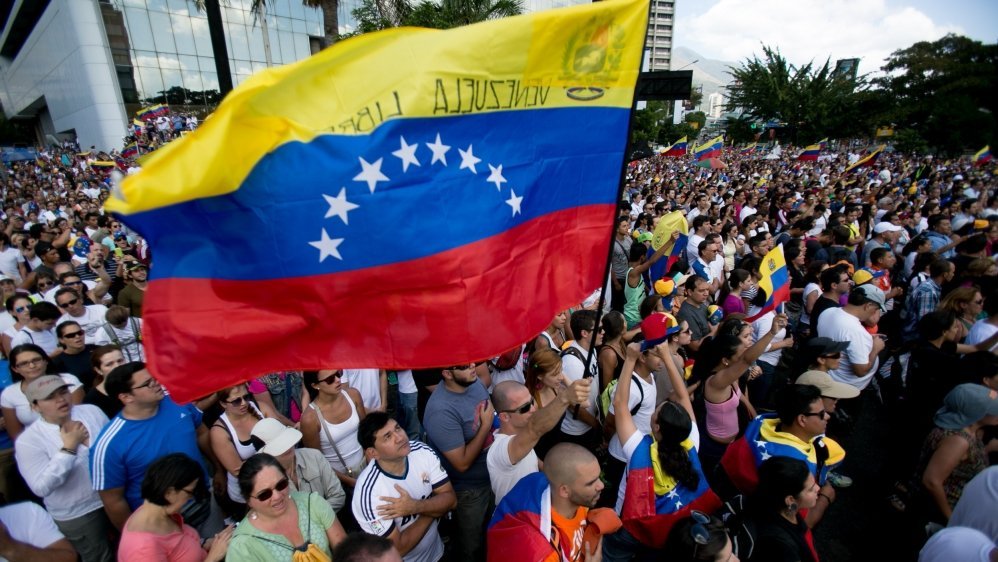
A popular saying goes. “It is a fool who does the same thing over again and again expecting different results,” On 9th January 2017, Venezuela protests started after the National Assembly declared President Nicolás Maduro of abandoning his office. This sparked national wide protests that have lasted up to date. How did Venezuela get into such a financial mess? Any lessons for Uganda?
Francisco Monardo an energy policy specialist at Rice University in Texas who also has been chief oil adviser to Venezuela’s main opposition leader notes that Venezuela’s oil reserves are huge, largest oil deposits on the planet. However, Venezuela only covers a tiny fraction of the oil reserves as technology allows them.
Nevertheless, oil accounts nearly for all Venezuela’s exports. Oil wealth transformed Venezuela’s economy from a poor nation into one of the richest in the world by 1970s. But, that decade marked the beginning of years of oil price volatility that lasted until the 21st century when oil surged to records high. Prices then plunged in the last few years.
The declining price of oil made the economy of Venezuela worse but the problems had started much earlier. To understand Venezuela’s current crisis, we had to go back nearly two decades. This is when Hugo Chávez was swept into power on the wave of populism. In 2002 a few years into his administration, President Chávez decided it was time to purge the national oil company, Petróleos de Venezuela. He perceived the national oil company as an enclave of technocrats that were making it harder for him to implement the reforms he wanted. He believed they were hiding resources from him and the government as well.
President Chávez saw the national oil company at its height of its political revolution. He thought Preveza, manager of the National Oil Company by then should help fulfil his popular mandate by funding his social programs and ultimately take part in some of them like distributing food at subsidised prices. The resistance of the oil executives happened at the same time and in even a bigger threat to President Chávez.
There was also an attempted coup to over President Chávez. All these events led to massive conflicts inside Petróleos de Venezuela. This resulted into the firing of the top executives.
He overthrew the top bosses who opposed and wasn’t discrete about it. President Chávez shocked the nation when he publically announced the names of the people he was sacking on a National TV station. He blew a whistle as if the people he was firing were like footballers who had made fouls on the football pitch. It was a dramatic moment. This later translated into massive loss of human capital at the national oil company. Workers went on strike to protest the loss of senior executives. In 2012/13, the oil strike crippled the economy. In response, President Chávez fired nearly half of the workforce.
This demised the expertise in the national oil company. Because the price of oil was high, the government embarked on a program to train experts to manage the oil company. However, the new recruits could match the expertise accumulated by the sacked workers and executives. The loss of senior staff still affects the performance of the company up to date.
The oil company couldn’t offer support to most of Venezuela’s abandoned resources. The oil company wasn’t operating at its full potential. This hurt the Venezuela’s economy even before the global economic crisis of 2008. Nevertheless, barrels of millions of oil were being sold, what happened to the proceeds?
Follow the oil money

Krusitova Colonel grew up in Venezuela but fears after his vocal criticism of the government. Colonel says he cannot be welcomed in Venezuela now. Having served on the board of the national oil company in 1970, he became an anti-corruption campaigner setting up his NGO and working as the Venezuela representative of Transparency International.
Venezuela’s over dependence on oil for revenues made some government officials very corrupt. A significant portion of the oil revenues went into an opaque fund called Fonden controlled by President Chávez and just three other people.
According to Francisco, Fonden was a financial fund totally parallel to the legal ways money should have been handled in Venezuela. By law, all the money coming from oil income should be given to the government to do its financial budget. The national assembly must approve the budget. Ideally, everyone should know how the money is spent.
Instead, a lot of the oil money went into Fonden; a fund with no parliamentary oversight. Fonden usually received 20 to 25 per cent of the total oil income. So you can imagine money in the hands of these four men as it was being utilized consolidate the political power of the government.
Much of the money from Fonden may well have been spent on projects to help privileged Venezuelans, but for Krusitova Colonel, the secrecy was a big problem.
When you have no accountability and transparency in how you handle the money, corruption is almost inevitable to take place. It wasn’t clear how the oil money was spent. He also says there was corruption in the way the national oil company being operated.
Corruption set in when national oil company started giving rush contracts to companies that were created by relatives and friends of managers. “I believe that corruption is key to why Venezuela is in its current crisis.” Adds Colonel. Venezuela had been a better state before President Chávez came into power. The country was getting almost her income from oil. There was some level of corruption but it was it wasn’t in the magnitude as of today.
Out of control
Mariagorita Meya lives in Caracas where food shortages have reached desperate levels. When President Chávez came into power, he seemed to be serving some of the country’s problems. He actually did deliver some of his promises. There were some successful projects. The most successful project was the food distribution with subsidised prices. So, people had access to all kinds of food. His score was to help the poor.
But some of the policies President Chávez introduced with over time Mariagorita says proved disastrous. After the coup attempt, President Chávez imposed foreign exchange controls and even capped the prices of basic goods. “Such policies can only work as a short term emergency response but Venezuela government has kept them in place for more than a decade,” Mariagorita says in a statement.
Venezuela has recently began to relax price caps. The government is allowing prices to rise in hopes of stimulating production to address food scarcity. Venezuela keeps multiple exchange rates including that keeps basic imports affordable. A black market has emerged. Dollars are scarce. Anyone who can get hands on the green bag can ask for hasty amount.
It is not just oil that operates in a black market today. There is even a black market for money as the Venezuela government has lost control of the economy.
Venezuela has two official exchanges. One is at Bs.F12 (bolívar fuerte) catering for a group of basic goods and medicines. The other is Bs.F700 per US$, for other basic goods. On the black market, it was Bs.F4400 by 2nd May 2017.
As the economy has deteriorated, Venezuela has devalued its currency numerous times. Since the country imports nearly all its food and goods, a weaker currency means higher inflation which exceeded 500% in 2016. The staggering price rises are in part of the regulations. The exchange rate controls have been crazy and exaggerate inflation.
Government’s response of minimum wage made the situation worse. Government’s continued interventions has hindered investments into the country thus sky rocketing prices.
Why would anyone risk investing in Venezuela with such uncertainty? Government policies over the past decades have played a big part in Venezuela’s current economic crisis. As Venezuela declined, a blame to President Chávez and his followers?
Where does this place Uganda?
The oil reserves in the Albertine region have caused a lot of excitement among our leaders with over ambitious plans of Uganda achieving middle income status by 2020. Countries with large non-renewable resources can benefit significantly from them, but over reliance on revenues from these sources poses major challenges for policy makers. Resource revenues are highly volatile and subject to uncertainty.
With the oil refinery expected to come online by 2020, just in time for the expected year when oil production is expected to start. Government intends to produce 30,000 barrels per day and then double the capacity over the next 10 years.
This, according to a senior official from the Ministry of Finance will see Uganda’s import bill on petroleum products reduce by US$600m. If Uganda indeed has substantial oil reserves, will it benefit the country in the long-term?
Some observers are predicting similar problems as in South Sudan, Nigeria, Equatorial Guinea and many other resource-rich African countries where corruption has been amplified. According to a survey conducted by Transparency International in over 176 countries all over the world, results from the study placed Uganda in 151th position on the global corruption index ranking. More worryingly, the sudden wealth that will come from oil might erode the quality of institutions. Politicians may be less pressured to undertake needed reforms and the windfall revenue may be spent on white elephants. Hope this culture is not inculcated into the oil sector!
However, countries as diverse as Botswana, Chile and Norway have shown that natural resources can be a blessing if managed well.
A word of caution
Uganda has discovered oil, but the revenues are not yet streaming in amidst a tense public debate on how to evenly distribute wealth generated from the oil revenues. Countries endowed with natural resources especially in Africa are characterized by conflicts. For example, the need to control oil in Sudan sparked off a war that saw South Sudan break off Sudan with 70% stake in the oil resources. Similarly, diamonds destroyed Sierra Leone and that’s why having a public debate and getting decisions on oil now is vital.
It is good that the government set up the Petroleum Fund. Managing oil revenues in a more transparent manner will greatly improve accountability and service delivery.
Back to you policy makers.