
Trust is the real asset behind every accounting engagement
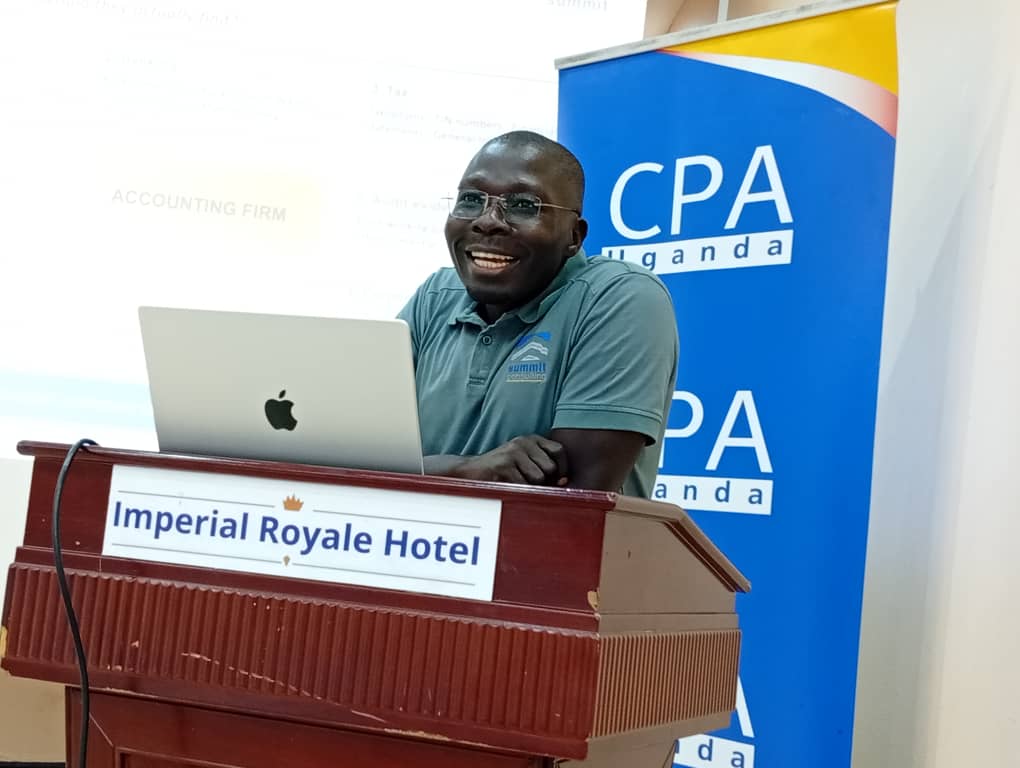
Today, 27th Nov 2026 at 11:30 AM, I was privileged to share with the professionals from the accounting firms at the 3-day conference at Imperial Royale Hotel, Kampala, organized by ICPAU
I started with a question: What does an accounting firm really hold?
The discussion brought the profession back to a fundamental principle: beyond accounts, reports, systems, and technical expertise, an accounting firm holds trust. Clients share sensitive financial, personal, and business information because they expect it to be handled responsibly.
A failure to protect that information can damage a client, undermine confidence and put the firm’s reputation at risk.
For firm leaders, this means cybersecurity and confidentiality cannot be treated as issues reserved for the IT department. They are governance, risk-management and professional-responsibility matters that require leadership attention.
I described how the expectations placed on professional firms are changing. In the 1990s, the familiar foundations of professional practice included competence, integrity and independence.
Today, firms must give equal attention to privacy, cybersecurity and digital resilience. Looking ahead, artificial intelligence governance, data provenance, machine identity security and algorithmic accountability are increasingly important areas to focus on as we head to 2046.
Clients are likely to place greater confidence in firms that can explain how they govern the use of AI, where their data comes from, who or what can access it, and how they protect information throughout its life cycle.
The AI opportunity must be matched with confidentiality controls
Artificial intelligence can support professional work, but its use must be governed. I cautioned staff against entering client names or identifying information into AI tools where that could expose confidential information.
The lesson for partners and practice owners is clear: do not assume that staff automatically understand what may safely be shared with an AI tool. Firms need practical AI-use policies, staff guidance and clear rules on the handling of client data. Leaders should also encourage clients to establish appropriate AI policies within their own organisations.
I also encouraged professionals to build their ability to work effectively with AI through prompt engineering. The quality of an AI response is influenced by the clarity and quality of the instruction provided.
A leadership question that every firm must answer: who can access what?
One of the most important practical questions raised was: “Who can access what?”
Firms should be able to identify who has access to
1. Former clients’ records,
2. Payroll information,
3. Partners’ email accounts and other sensitive material.
Shared drives, messaging platforms and email can become routes for data loss
I drew attention to the risks associated with shared drives, WhatsApp, USB devices and email. Firms were challenged to consider whether they have the tools and processes to detect when company documents are being shared, transferred or uploaded in ways that may compromise confidentiality.
For example, a hacker sends an email requesting an organisation’s legal documents. A staff member opens the message and, through malicious activity, documents may be uploaded or exposed without the staff member realising what has happened. In that instance, are you able to notice using systems?
Data protection: Know your role and ask the right questions
I asked the members to understand whether they act as data controllers, data processors or both. This distinction matters because organisations need to understand their responsibilities when they collect, use, store, share, or otherwise process personal data. It’s important to work towards compliance and make data protection part of a safe and responsible working environment.
The following should be the questions to ask yourself always;
• Why do we need this data?
• What data do we actually hold, and what does it contain?
• How long should we keep it?
• Who is responsible for keeping and managing it?
• When and how may the data be corrected?
• Who is authorised to see or access it?
• How will we protect it?
Succession and the future readiness of firms.
Succession was identified in the presentation as one of the biggest challenges facing firms. While the discussion focused strongly on technology and information security, the broader leadership message is that firms must build resilient organisations that can protect client relationships, knowledge and confidential information through change.
Strong governance, documented processes and responsible access arrangements support continuity as well as security.
What accounting firm leaders should do next?
My message was ultimately a call to action. Firms do not need to wait for a major incident or for future technologies to become standard before strengthening their practices. Protecting trust is a continuous responsibility
The central message was that trust is strengthened when firms protect confidential information, control access, use technology responsibly, and demonstrate that they take data protection seriously.
In a connected and AI-driven world, professional integrity must be reflected not only in the quality of the work delivered but also in how information is collected, accessed, processed, stored and shared.
Accounting firms that act now to strengthen their governance, people and systems will be better prepared to serve clients and sustain confidence in the profession.
Mr. Strategy.
0 comments
Leave a comment