
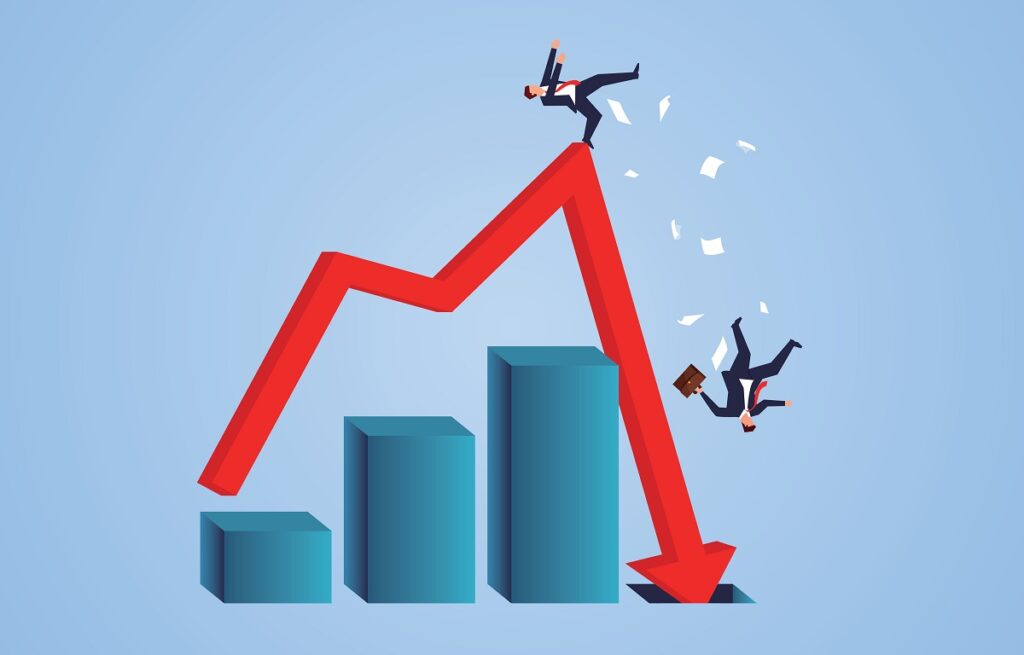
Your Business Model is already dying, You just don’t see it
Most CEOs think their biggest challenge is competition. It’s not. The real threat? The slow, silent decay of their business model. The problem isn’t that change is happening too fast. It’s that you’re reacting too slow.
Comfort kills
I once worked with a once-thriving manufacturing firm. Their CEO bragged about their “proven model.” Profits were steady. The leadership team was comfortable. Then, a nimble competitor introduced a direct-to-customer model, cutting out middlemen. In less than three years, the “proven model” became a liability. Sales plummeted. Market share vanished. The CEO blamed the economy. The real culprit? His refusal to see the iceberg ahead.
Statusquoholics kill businesses
Most companies assume that because their model worked yesterday, it will work tomorrow. This is delusional and myopic. The burial grounds of business history is filled with once-large companies that ignored early warning signs remember the mighty Kodak, Nokia, and Blockbuster. A single iPhone disrupted businesses in ways they could never anticipate. The common thread? They mistook stability for security. Always avoid being too comfortable as it is the enemy of greatness.
The best companies don’t defend old models; they destroy them before the market does. It is part of the organizational design. It’s part of their DNA. Look at the Development Bank of Singapore! They rewrite banking rules every single day. Leaders are always concerned about the future because that is where they will spend most of their time. Amazon killed its bookstore identity before competitors could. Apple disrupted its own iPod with the iPhone. The question isn’t “Is our model working now?” but “Will it still work when the rules change?” Is it future-proofed? Can it survive when the ice gives way?
Design to self-disrupt is the way to go…
If you’re not already testing ways to make your own business model obsolete, your competitors will do it for you. Hint: they won’t spare you. Here’s how:
- Fire your sacred cows, What are the untouchable assumptions in your business? Kill them. The moment a strategy becomes “too critical to change,” it becomes a liability. Have someone who takes stock of the “untouchable assumptions or persons or processes…” Those sacred cows won’t take you far. The earlier you identify them, the better.
- Adopt what I refer to as a “two-speed” Strategy, Maintain your core business while investing aggressively in experiments that could replace it. At Google, they call such “Moonshot” ideas. They are ideas that put bets on the next big thing. Establish your primary core and then invest some profits in moonshots. You learn from both failures and successes.
- Create an internal disruptor, Set up a separate team whose job is to challenge your core business. If your own people won’t disrupt you, your competitors will. The “voices of reason” in your company help challenge your ideas and business model. That way you refine them through reverse engineering. (What to know more about this? Contact Summit Consulting Ltd to review your strategy, execution mechanisms and monitoring effectiveness before it is too late.)
- Measure what matters, Don’t just track revenue and profits. Watch early indicators like customer behaviour shifts, technology adoption rates, and competitive blind spots, and churn rates. Take time to know why people churned? Or why new customers join? Use the feedback to finetune your business. That is the essence of value addition.
Choose your disruption
Disruption is coming. You can either be the architect of it or the victim. The worst mistake a CEO can make isn’t failing to see the future. It’s refusing to let go of the past.
Your business model is dying. The question is, will you kill it before it kills you?


