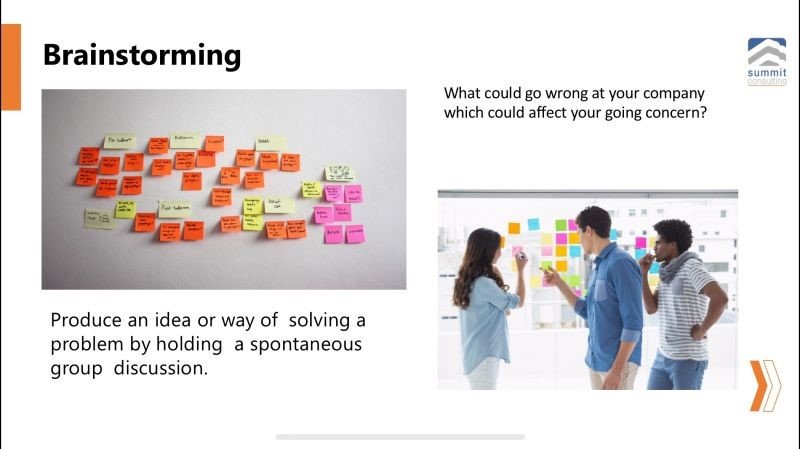
During risk assessment sessions, I emphasize to leaders that effective brainstorming is not just about generating ideas but about structured problem-solving that leads to action.
For each strategic objective, what could go wrong? I let different people share ideas.
Brainstorming is like preparing a well-balanced meal. Different people contribute ingredients, some add essential spices, others provide the core components, and occasionally, someone suggests an unusual addition.
However, without a clear recipe, proper mixing, and a thoughtful evaluation of what works, the outcome may be either a culinary masterpiece or an unpalatable mess.
Similarly, in a risk assessment context, brainstorming must be structured and outcome-driven.
Here’s how to ensure it delivers value:
1) Define the problem with clarity, A focused question leads to meaningful insights.
2) Encourage diverse participation, Risks appear differently at various levels of an organization.
3) Foster open discussion while maintaining relevance, Every idea is welcome, but critical thinking is essential.
4) Synthesize and prioritize, Ideas must be refined, categorized, and linked to strategic action.
Brainstorming is a powerful tool, but only if it moves beyond idea generation to decision-making.
The key question for any leadership team is this: When you brainstorm risks, does it translate into action or just end up as notes on a board?


